
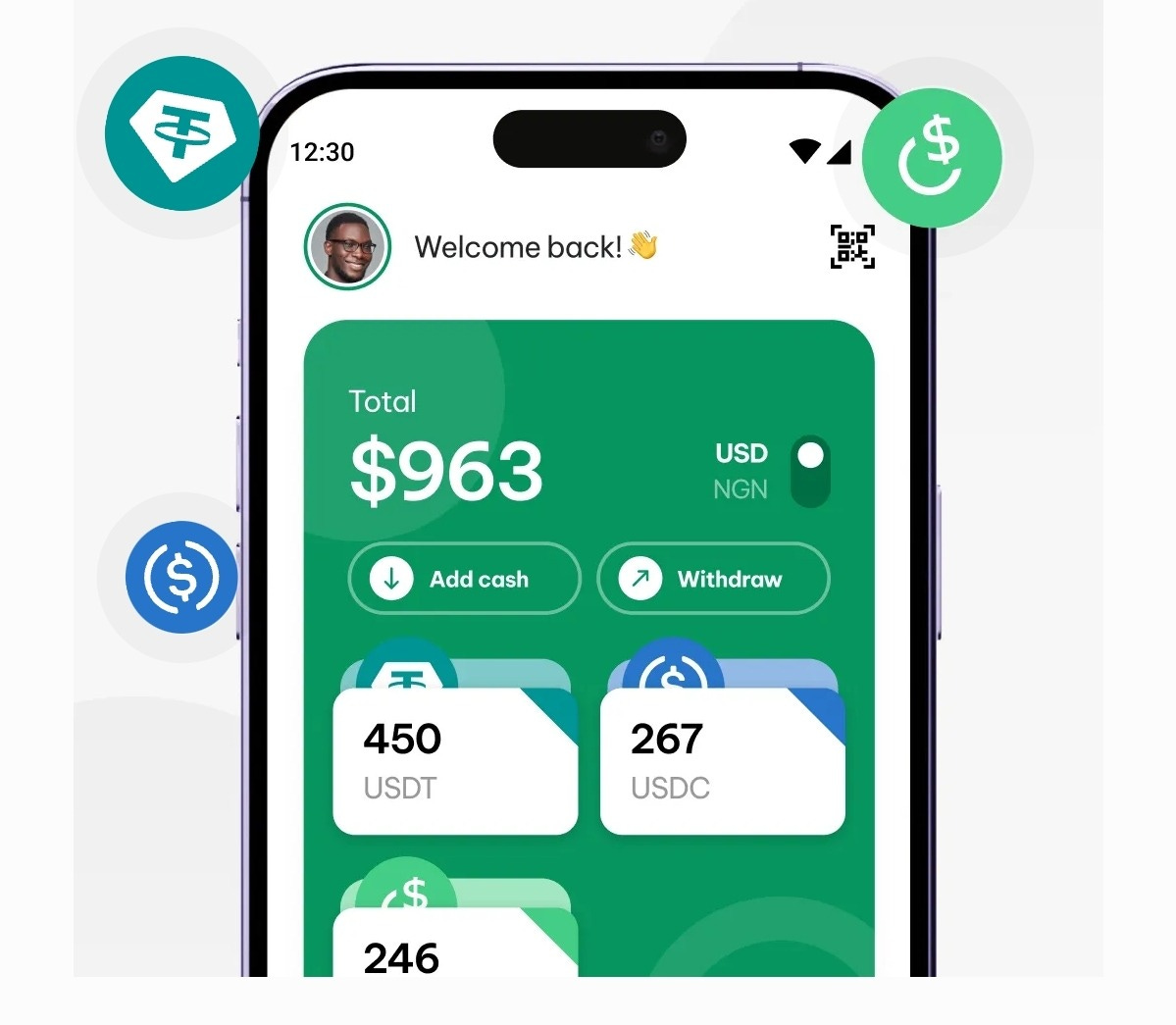
I downloaded an app that lets you spend crypto with just a phone number, earn on your savings, pay across 60 countries, and even play games that pay you. They claim to have connected over 12 million wallets, but I can bet that 90% of you reading this have never heard of this app. And that is where it gets interesting.
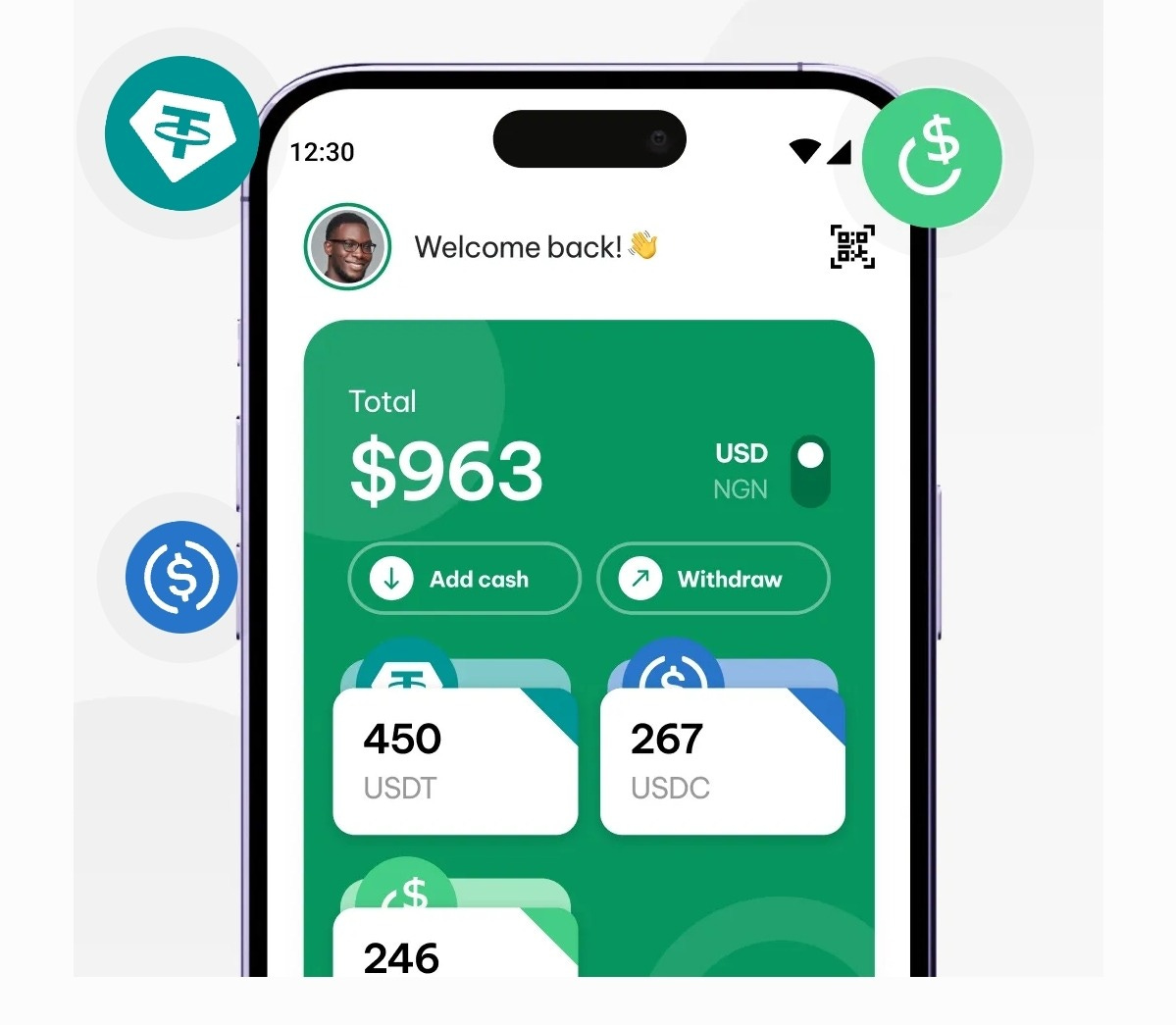
In December, I came across MiniPay via a mention on X about simple-to-use apps in the crypto space. Because I was already deep in a case study about how to market to people who do not care about crypto jargon, the mention caught my attention and I downloaded it.
What I found inside the app was genuinely impressive; you can simply create an account with your phone number and start spending crypto. I had never seen that before.
From a marketing pov, I felt disappointed. And that’s exactly how people outside crypto feel when we offer them a good solution but wrap it in crypto jargons they don’t need.
Before I get into the marketing critique, let me show you what this app actually does because I promise it is more than what the name suggests. And the backstory matters here too.
MiniPay is built by Opera, the same browser company that hundreds of millions of people across Africa and the rest of the world have been using for years. It started as a feature inside Opera Mini and has since grown into its own standalone app available in over 60 countries.
That context matters because Opera is not some unknown startup. The reach is already there. Which makes what I am about to show you even more interesting.
What the app actually does
When you open MiniPay, the first thing you see is your balance. You can toggle between viewing it in USD or your local currency. You can deposit money, withdraw it, and the app automatically earns you returns on whatever you keep in it.
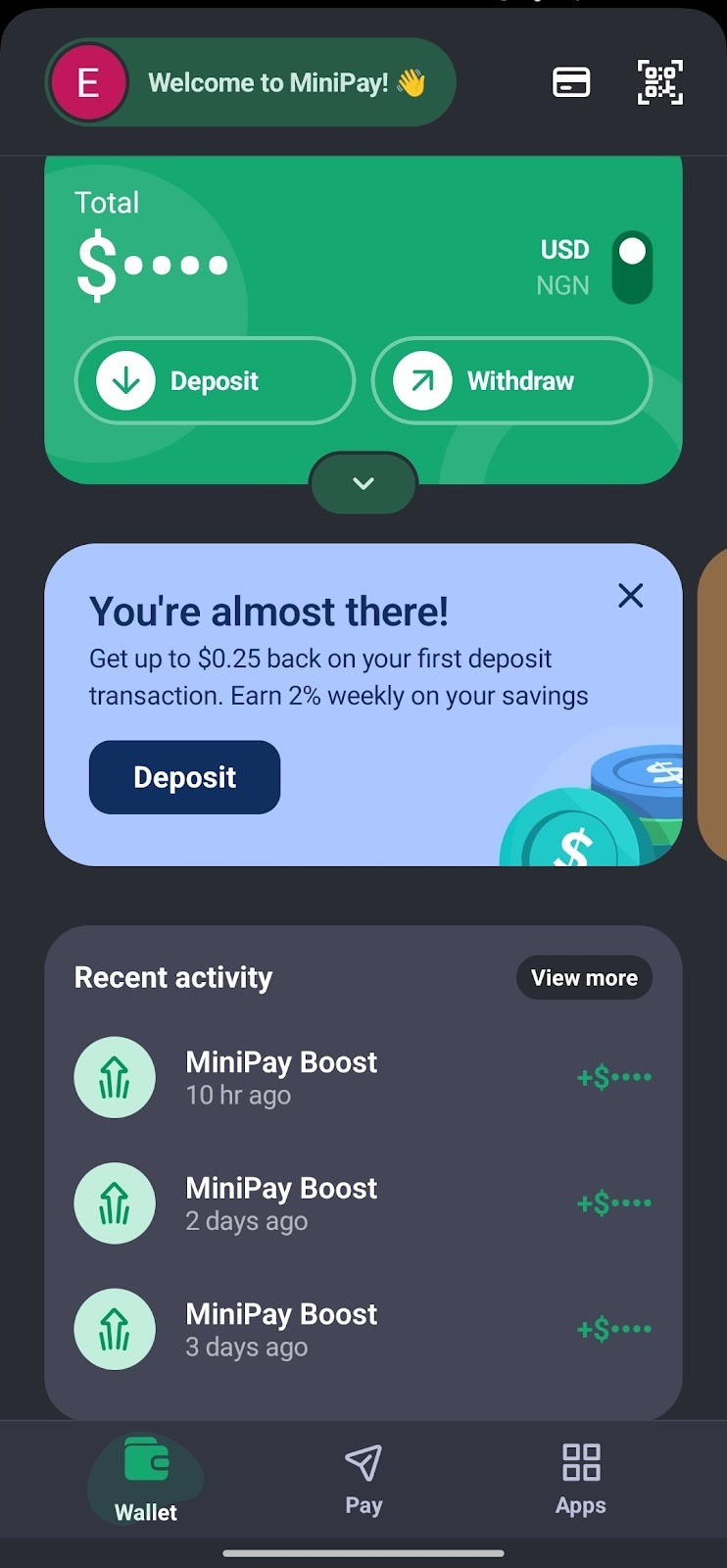
Then you go to the “Pay” section where you can send money to someone using just their phone number, instantly and for free. If the person you are sending to is not on the app yet, you can generate a shareable cash link and send it however you like, WhatsApp, text, email, it does not matter (that’s a genius growth loop right there!)
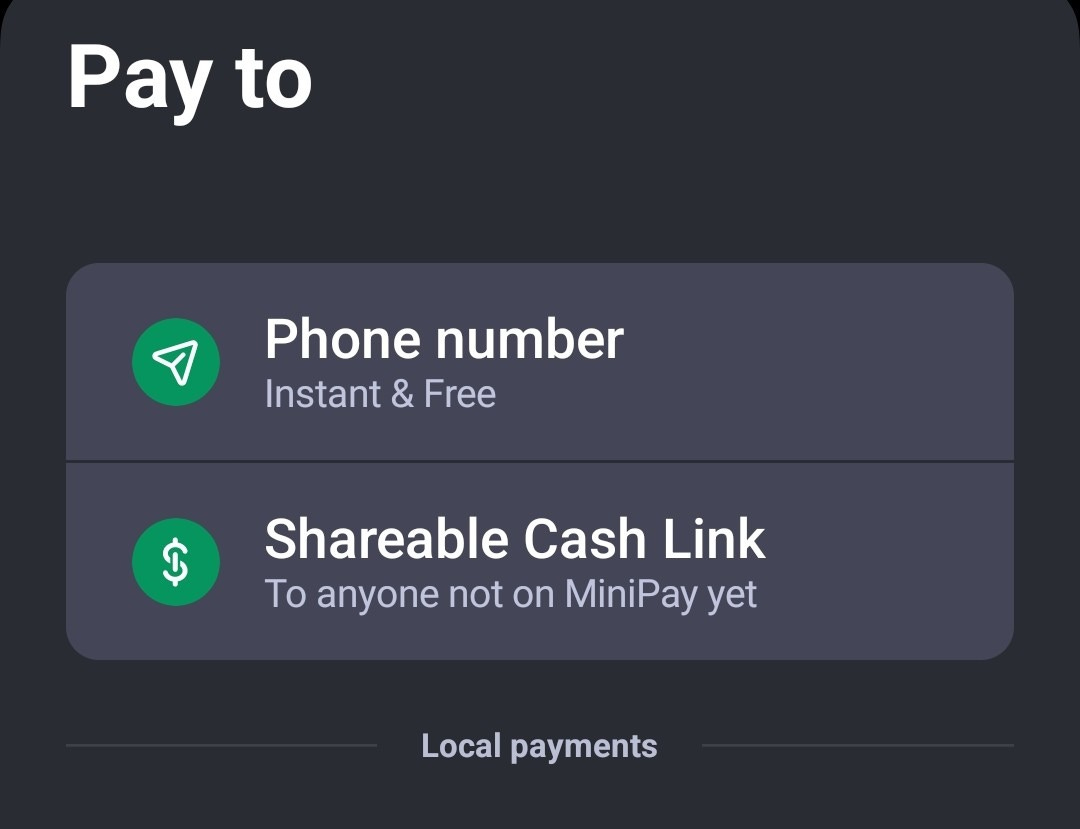
There is also a bank transfer option that works with regular account numbers (similar to how Opay, Moniepoint and some mobile payments work in Africa).
MiniPay supports payments across 63 countries including Nigeria, Ghana, South Africa, Kenya, Tanzania and Cameroon on the African side, Brazil and Argentina in Latin America, and Germany, France, Poland and Turkey in Europe.
Every transfer is claimed to settle in about one second and costs a fraction of a cent.
Beyond payments, the app has 27 mini apps built inside it covering bill payments, airtime purchases, and receipt scanning for cashback rewards. Those 27 apps are said to generate over 15 million opens every month from users.
All of these big numbers, but how come you’ve never heard of them?
Because the marketing is speaking to the wrong people.
When I first looked at MiniPay a few months ago, here is the meta description they were using to introduce themselves to people who find the app through search:
“MiniPay is a non-custodial wallet built on the Celo blockchain. All transactions are facilitated using USD stablecoins.”
Now imagine you are a freelancer in Lagos who has been waiting four days for an international client to pay you and losing about 10% of every payment to transfer fees.
You Google something like “how to receive dollars in Nigeria” and MiniPay comes up. You read that description, you see blockchain, non-custodial, stablecoins, and you have no idea what any of that means. More importantly, you do not care. So you scroll past it and look for other options.
By March, they tried to change the meta description:
“Send funds globally. Sending with MiniPay is like sending a text, done in 5 seconds. All you need is a phone number…”
This is a much better improvement because it tells you exactly what the app does and why it is useful. A freelancer in Lagos reads that and leans in. A market woman in Ibadan reads that and thinks “okay, tell me more.”
And then the very next sentence says: “MiniPay is a self-custodial stablecoin...” and just like that, you have lost them again.
They got 80% of the way there and then tripped at the finish line. Which honestly makes the point better than anything I could have written myself.
Many crypto projects still struggle to explain what they do without using the native parlance.
It is like starting a conversation with “I can help you save money” and then immediately following up with “via a decentralised autonomous yield protocol.”
But the meta description is only part of the story. If you go to their website right now, the main headline, the first thing every single visitor sees, reads: “Do it all with Stablecoins.”
Not “Receive and convert dollars to your local currency” but “Stablecoins” – a word that the taxi driver, the market woman, and the freelancer in Kenya have no relationship with whatsoever.
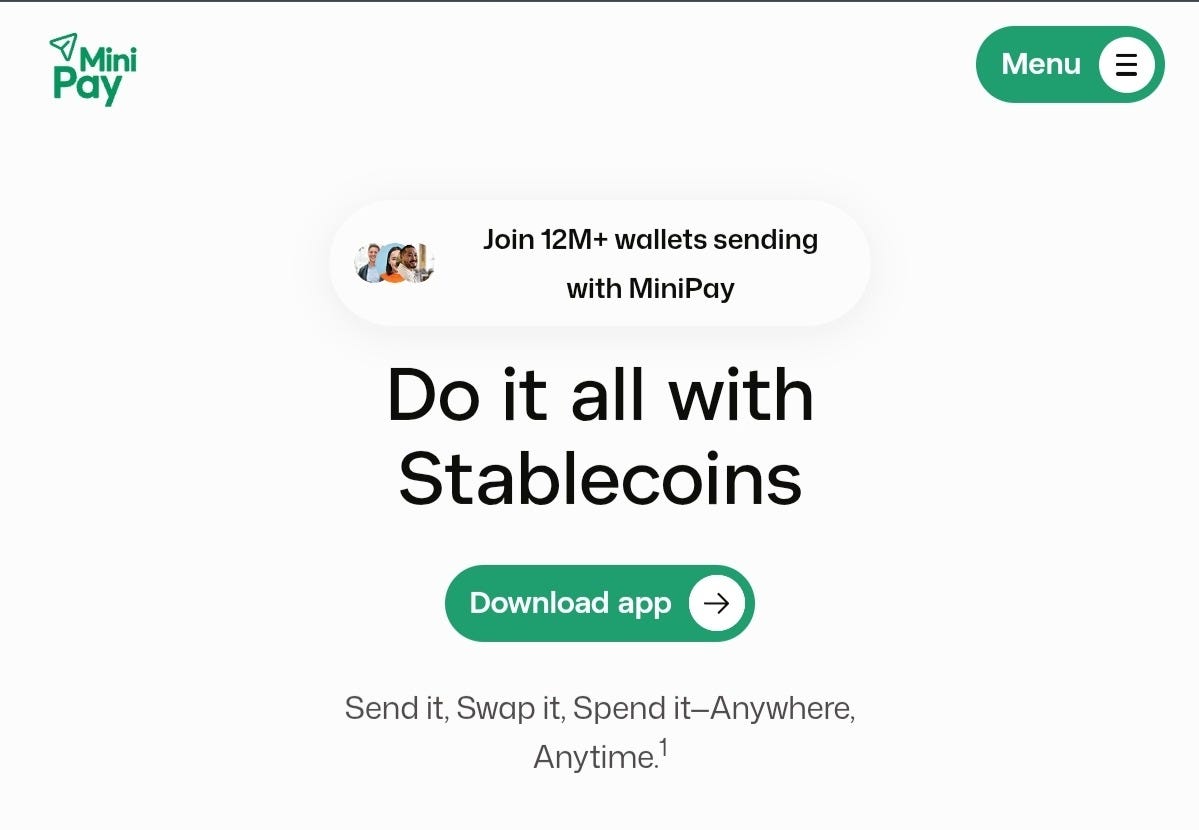
The entire messaging strategy, from the website headline all the way down to the app store description, is written for people who are already in crypto. The person who actually needs this app is not being spoken to anywhere on the page.
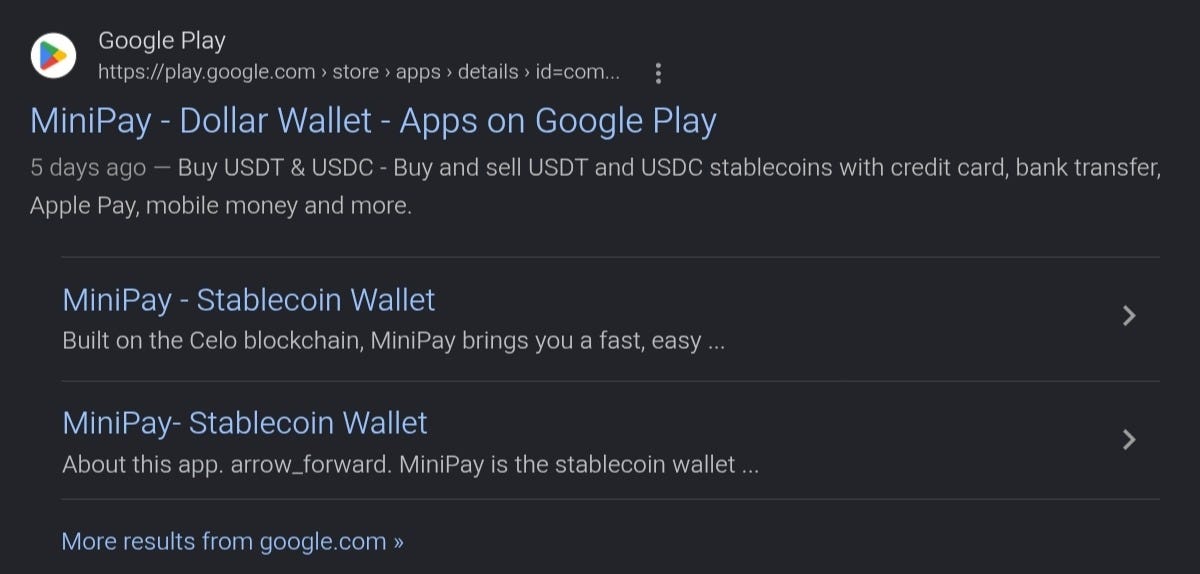
Opera already has hundreds of millions of users. Many of them are in exactly the markets MiniPay is trying to reach, Nigeria, Kenya, Ghana, across Africa and Southeast Asia. These are people who already trust the Opera Mini browser with their data every day. They are one step away from MiniPay. But the message is still not fully speaking to them.
Why the marketing has a problem
There are too many apps claiming to help you offramp or save your stablecoin assets, so MiniPay is competing for the same market share as everyone else in that space. (Ain't nothing wrong with that btw, but there's no outstanding thing to differentiate them from otherrsssss.)
The people who actually need this app just want to receive or send dollars quickly, hedge inflation against their local currency, and have their money work for them. These people do not understand USDT, USDC, the Celo blockchain or stablecoins.
That is the larger market everyone ignores, maybe because it feels cooler to market to people who are already in crypto.
The incentive structure
MiniPay uses an incentive mechanism called “ boost reward”, where you earn small amounts regularly just for having the app and keeping money in it. On paper this sounds like a great incentive. In practice, here is what a real user notification actually looks like:

And this is the part that makes the problem bigger than just the marketing. Even if the marketing somehow got the right person to download the app, they open it and the first thing they see on the home screen is their balance displayed in USDT and USDC. The boost reward notification says “0 USDT.” The wallet toggles between USD and NGN but the rewards still speak in crypto.
A random person who downloaded this app because someone told them it was a good way to save money and send it to family has no idea what USDT means.
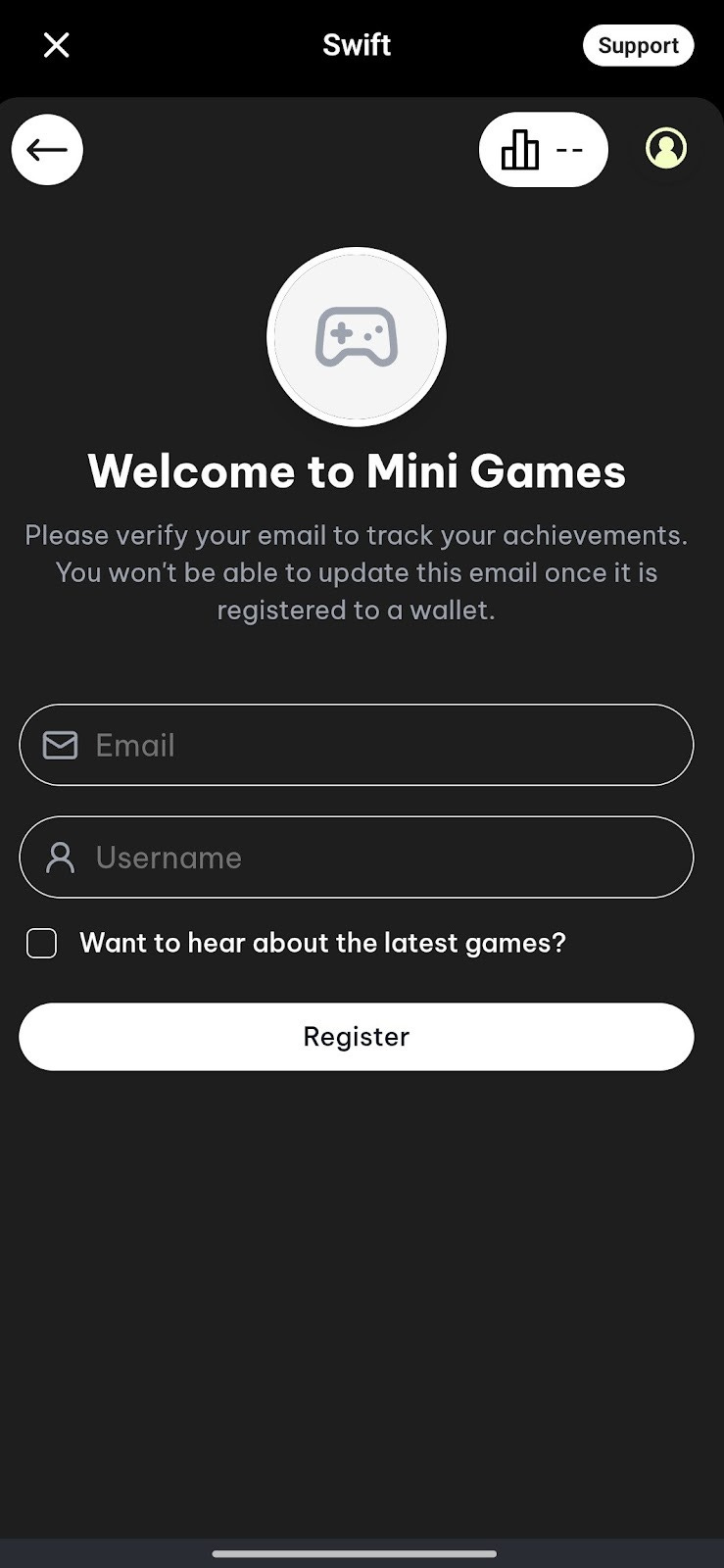
And it does not stop there. The app signs you up with just your phone number, which is genuinely impressive and removes one of the biggest barriers to entry for people who are not used to crypto apps. But then you tap on Mini Games and the app stops you and asks you to create a separate account with an email address and a username before you can play anything. The promise was “all you need is your phone number” and the reality is “actually we need more from you” the moment you try to explore what else the app offers. For someone who just wants things to work, that friction is enough to make them close the app and not come back.
Further reading - How to market crypto to people who don’t understand crypto.
12 million wallets?
Reward-driven campaigns will ALWAYS attract people who want the reward.
Those set of people create accounts, collect whatever is on offer, and disappear. Some of them create multiple accounts to collect the reward more than once. In January the wallet count was reported at 10 million. By March it was 12 million. Two million new wallets in roughly two months sounds impressive until you ask what is driving that growth. If it is organic adoption from people whose lives genuinely got easier, that is a real story. If it is rewards farming, those numbers will keep climbing and the product will keep struggling to show real daily usage.
The more important question has never been how many wallets were created. It is how many real people are using this app today because it solved a problem for them.
How Minipay can improve their marketing
There's nothing wrong with marketing to people who understand crypto. In this case, it's necessary for MiniPay to implement a multi layer messaging strategy that cuts across all target audience.
The first thing is to have a tagline that a non-crypto person understands without needing anyone to explain it. Something that makes the right person stop and think “wait, that is exactly what I have been looking for.” The current description talks about what the app is built on. A good tagline talks about what the app does for you.
What it could sound like:
Send money as easy as sending a text.
Why pay to use your own money?
Your bank charges you fees. We pay you instead.
Cash sitting there doing nothing is not a savings plan.
Stop renting your money to banks.
Banks can wait.
Own your money
Fees are a scam. We said what we said.
Meet users where they are: markets, villages, taxi parks, university campuses – places where people deal with broken payment systems and financial exclusion every day. Utilise offline marketing - Talk to people who have never used crypto and find out what they actually need from a money app (just the way Gnosis did it).
Rename USDT or USDC to something a layman can relate to; dollars.
Design direct-to-consumer marketing strategies that resonates peculiarly to the problems of people in unbanked areas.
Don't assume users should know the mini apps to interact with. While signing up, ask them questions and suggest the apps they should check out based on preference. This simple design will show that the brand cares about them. In the same vein, personalise notifications based on the data collected (lifecycle marketing). Generic pop up notifications barely do any good.
Mass adoption has never happened on Crypto Twitter. It happens when someone who has never thought about crypto in their life realises that this app makes their actual daily problem easier to deal with. It happens when a market woman tells her neighbor about it because it worked for her. It happens when the product feels like it was made for them and not for someone who already reads blockchain news every morning.
The bear market has always taught something important:
Products that only work when numbers go up are not real products. The opportunity here is in becoming something people genuinely cannot imagine living without.
MiniPay is not a bad product. If anything it is a product with more features than most apps in its target market could dream of having in one place. 27 mini apps. Bill payments, fast cross-border transfers at almost no cost, and interest on savings.
The huge gap exists between who they should be marketing to – rather than recycling the same people who have at least 3 other apps they use to earn rewards.
I share case studies and marketing tips twice a month, written simple enough that anyone can follow along whether you are deep in crypto or just curious about it.
Web3 marketing stories are boring BUT NOT HERE!
Need help with creating your brand story? Send me an email or a DM on LinkedIn
All my love,
Web3talez